Before Piling Rigs Arrive in Abu Dhabi: A Site Readiness Checklist
A practical pre-mobilisation guide for Abu Dhabi site teams covering rig platforms, plant routes, utilities and responsibility for site readiness.
November 22, 2026
A piling rig can arrive on schedule and still sit idle. The working platform might be incomplete, the delivery vehicle might be unable to turn past the gate, or buried services might still need to be marked on the ground. Use this checklist alongside the approved engineering design and project risk assessment.
Why piling site preparation starts before the rig arrives
Start by tracing the rig’s journey from the gate to the first group of piles. A completed platform does little to help if the offloading area or the link from the access road is unavailable. Resolving clashes early protects the programme and avoids idle plant and crews. Give every outstanding item an owner, a due date and evidence of closure, such as an inspection record or an updated services drawing.
Assess the piling rig working platform
A working platform supports the piling rig and associated plant throughout their planned movements and operations. A qualified professional should assess the underlying ground, including variable fill and weak zones, using load data for the actual plant configuration. Loads and their distribution can change during travel, turning and operation. The assessment should account for access ramps, transitions, manoeuvring areas and lifting positions wherever they form part of the working area.
Before handover, review usable boundaries, surface condition, drainage and inspection records. Agree who will inspect and maintain the platform throughout its use. The Federation of Piling Specialists (FPS) and the Deep Foundations Institute (DFI) provide guidance on platform design, construction, inspection and maintenance. In Abu Dhabi, section 3.19 of ADOSH-SF CoP 46.0, Underground Construction, covers piling operations and calls for piling mats where necessary to provide a firm, level surface with suitable bearing capacity. Check any proposed handover form, including the UK FPS certificate template, against the project documents and applicable requirements.
Check site access and plant routes
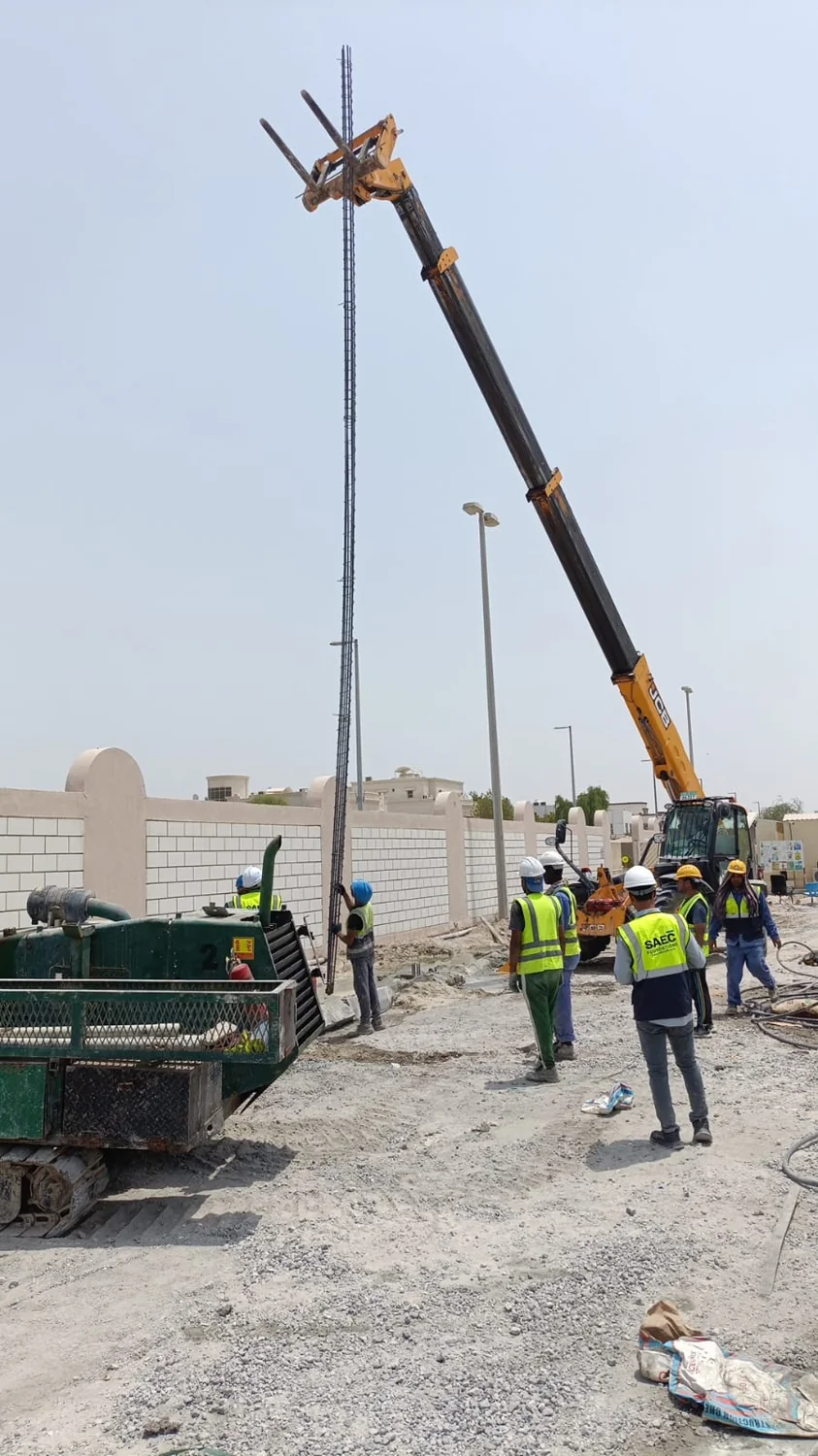
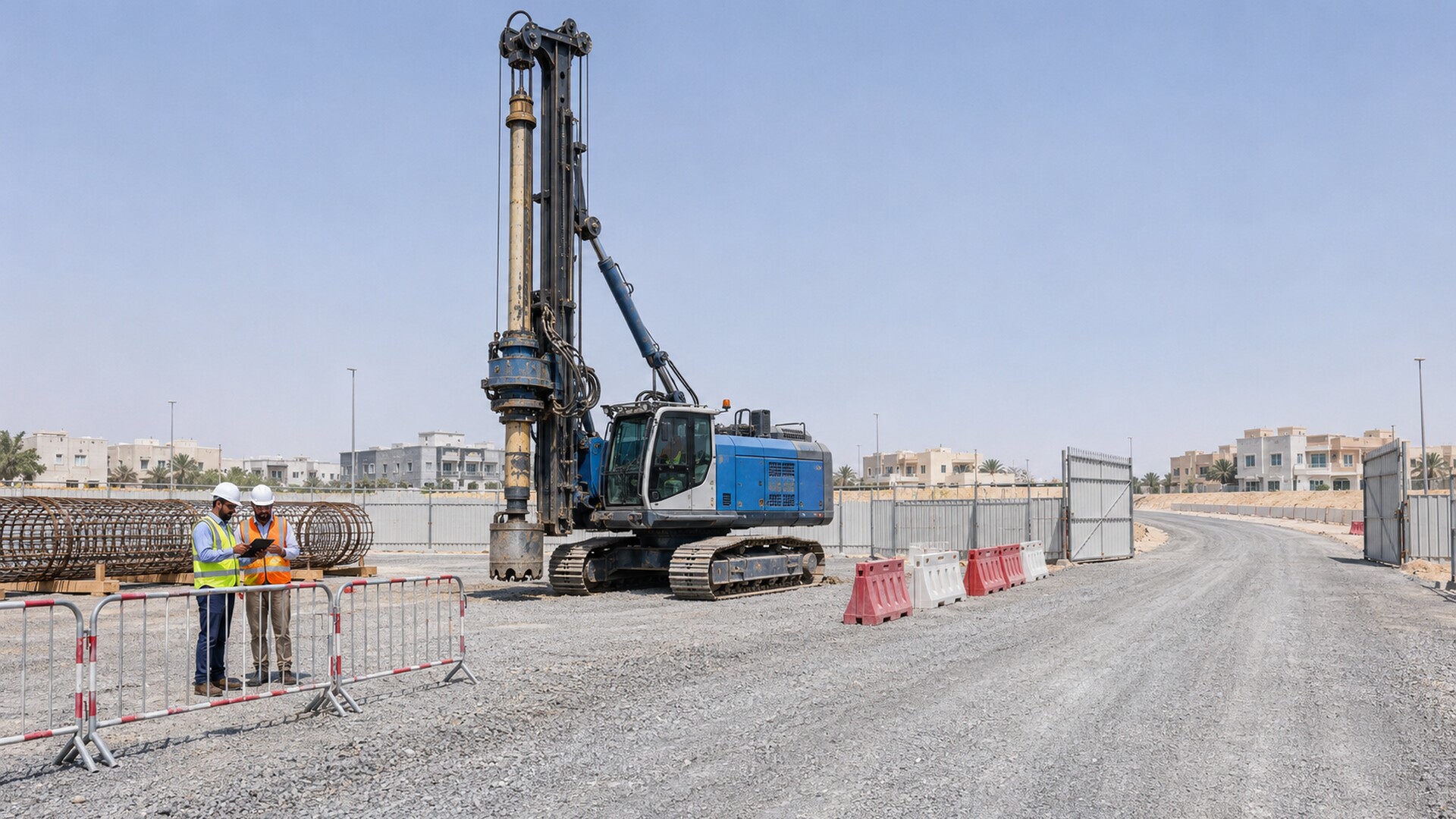
Check gate width, overhead clearance and turning space against the planned vehicle and plant dimensions. Identify waiting points, loading and offloading areas, rig turning space, crane positions and reinforcement cage storage. Coordinate deliveries so vehicle and pedestrian routes remain clear, and show exclusion zones and emergency access on the traffic plan. Check that other trades and stored materials will leave the manoeuvring areas available during piling.
Locate buried services and other obstructions
Gather records for electricity, water, drainage, telecommunications and other utilities. Arrange on-site verification and marking with relevant parties under the project procedures. Check for conflicts at piles, plant routes and crane positions. Include buried foundations, tanks and voids, as well as overhead power lines where present. Where a service route is uncertain, keep that area unavailable pending verification. Consult Abu Dhabi’s code of practice for overhead and underground services when planning work near utilities.
Review the ground investigation and groundwater information
Share the latest available ground investigation report, including borehole logs, investigation locations and levels, and dated groundwater observations. Relate these records to proposed platform and excavation levels. Flag variable fill, hard strata and potential obstructions. If the groundwater readings are old or site conditions appear to have changed, refer the discrepancy to the geotechnical specialist. Use the review to assess plant selection, piling method and site constraints.
Agree responsibilities before mobilisation
Use the contract, specifications and applicable safety requirements to record who prepares, inspects, hands over and maintains the platform. Assign ownership for site access, permits, pile setting-out, plant movements, the work sequence, water and power where needed, site safety, and inspection and handover records. Review simultaneous activities, especially excavation or lifting alongside the rig route, and name the person who confirms that plant can be dispatched once blocking items are closed. See also SAEC’s guide to planning a CFA piling programme in Abu Dhabi.
Reassess when site conditions change
Rainfall, ponding, fresh excavations, local settlement or a diverted route can affect the basis of the original assessment. The same applies to a substitute rig or changes in plant configuration and loading. Suspend use of that area and notify the responsible person so a qualified professional can determine what needs reassessing and when the area can reopen. Record the change and brief affected teams before work resumes.
Pre-mobilisation checklist
At the coordination meeting, record each item’s status, owner, due date and evidence of closure.
- Ground investigation — The team has the available report, borehole logs and groundwater records.
- Plant — The rig model, configuration and loads for travel, manoeuvring and operation are available for review.
- Platform — Usable limits, condition, inspection record and maintenance ownership are confirmed.
- Access — Gate, clearances, route, turning areas and offloading point have been checked.
- Utilities — Services and obstructions are marked, with relevant conflicts resolved.
- Storage and lifting — Cage storage, crane positions, exclusion zones and movements are coordinated.
- Drawings and survey — Current construction drawings are available and first-phase pile positions and levels are confirmed.
- Permits and safety — Required permits, access arrangements and the risk assessment are ready for the planned phase.
- Responsibilities — Handover points and the route for reporting changes are recorded.
- Decision to mobilise — The work area is identified and dispatch blockers have been closed.
How SAEC supports piling readiness
Super Arc Engineering Construction provides piling and deep foundation works. Its piling services include reviewing ground conditions, loads and access with structural and geotechnical designers. To discuss your piling scope, share the project location, geotechnical report, available pile drawings and known access constraints via the SAEC contact page.
Frequently asked questions
What is a piling rig working platform?
It is a prepared surface that supports the rig and associated plant during movement and operation within defined limits and conditions of use.
Who is responsible for preparing the platform?
Check the contract, specifications and applicable requirements. Confirm who prepares it and who is responsible for design, inspection and maintenance before mobilisation.
What information is needed before the rig arrives?
Have the rig configuration and loads, ground investigation, pile layout, platform status, access routes, utility locations and lifting and safety arrangements ready.
Is the ground investigation report enough to start?
The team also needs to review plant data, the platform, routes, utilities, construction drawings and permits relevant to the first phase.
What if the rig changes after the site has been prepared?
Have a qualified professional review the platform and routes against the substitute plant’s loads and dimensions before use.
How can teams reduce readiness-related downtime?
Hold a readiness review before dispatch and close outstanding issues with site evidence and current documents.
Share this article
If you found this article helpful, share it with others