Bored Piling with Temporary Casing in UAE Sands
Why bored piles in UAE sands need temporary steel casing, how cased piling works step by step, and the checks that keep each pile sound.
Loose sand and shallow groundwater are a poor combination for an open bore. Without support, the sides can collapse before the concrete is placed, leaving a pile with soil inclusions or a reduced section. Temporary steel casing is the standard way to prevent that on many UAE sites.
How cased bored piling works
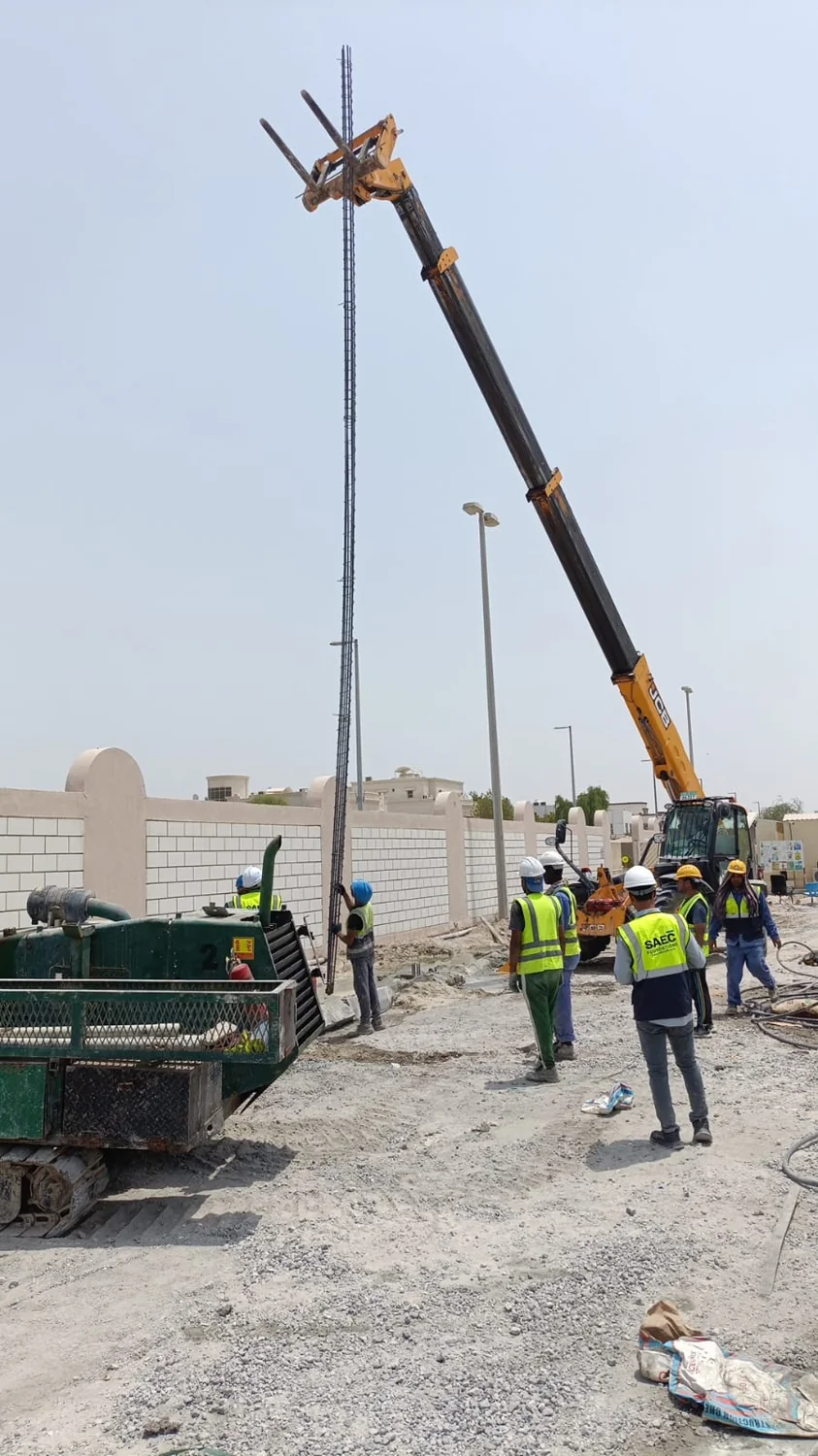
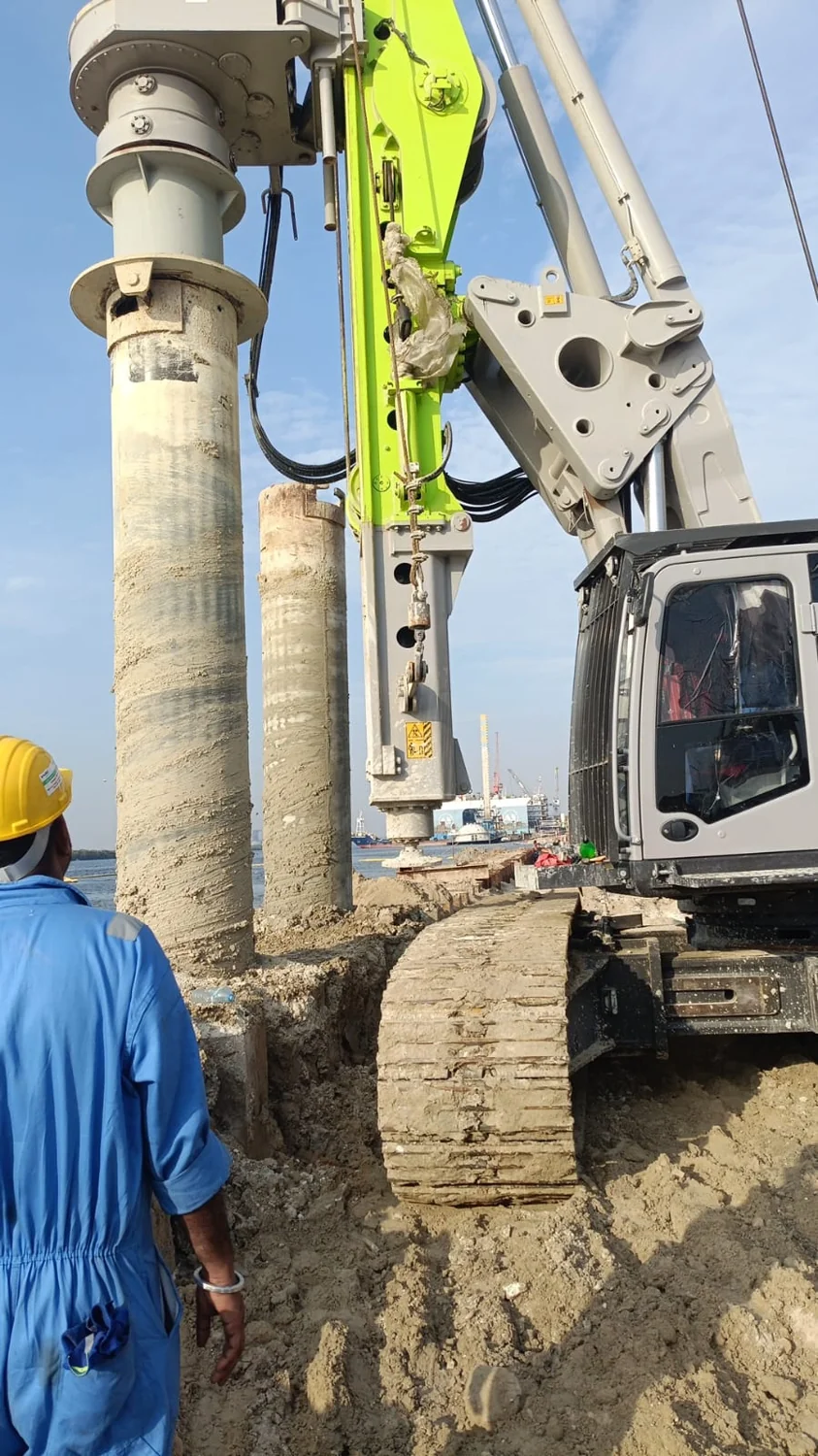
- The casing is set out and installed through the unstable upper layers, by the rig or with a vibro hammer.
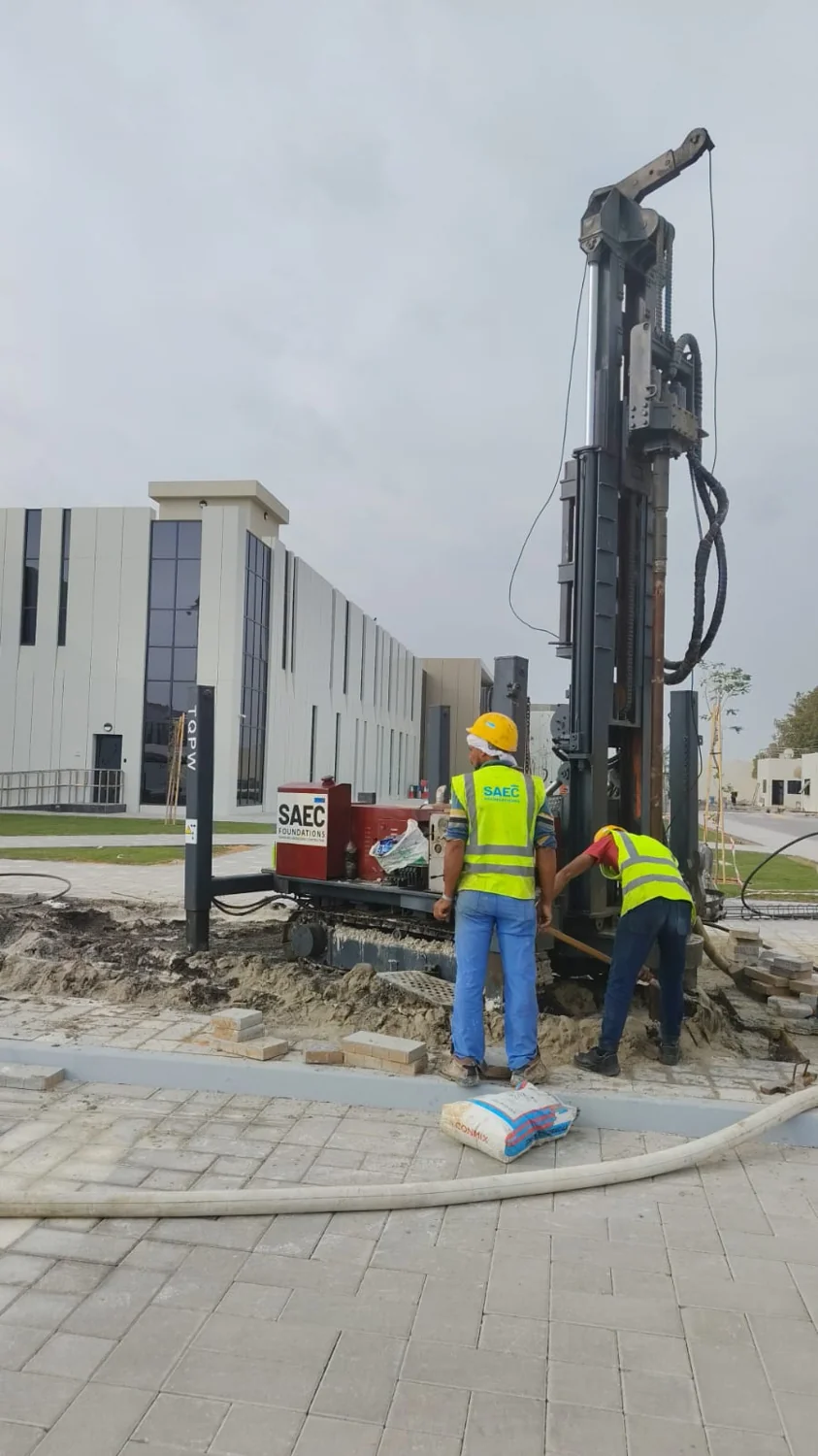
- The rig drills inside the casing to the design depth, and the base is cleaned.
- The reinforcement cage is lowered with spacers to keep the concrete cover.
- Concrete is placed from the bottom up through a tremie pipe, so it pushes water and loose material out.
- The casing is withdrawn while the concrete is still workable, keeping the concrete level above the casing toe at all times.
Casing length and equipment
The casing has to pass through the collapsing layers and seat in stable ground. Our rigs install casing up to about 10 m long. Longer casing needs a vibro hammer and a crane, which changes the equipment on site and the access it needs, so the casing length should be settled from the soil report at tender stage.
Casing, drilling fluid or CFA?
- Temporary casing: reliable in loose sand and high groundwater, and the usual choice for large diameters and where the pile enters rock.
- Drilling fluid: bentonite or polymer supports deep bores below the casing, but needs mixing, storage and disposal.
- CFA piles: the auger supports the bore, so no casing is needed. Fast for moderate diameters and depths, but penetration into rock is limited.
Our pile type guide covers the wider comparison.
Quality checks on every pile
- the bore depth and base cleanliness before concreting
- the concrete volume placed against the theoretical volume
- concrete workability, and cubes taken from every pour
- cage level and cover
- integrity testing after curing, with cross-hole sonic logging on large piles where specified
See pile load testing explained for what each test shows.
Project experience
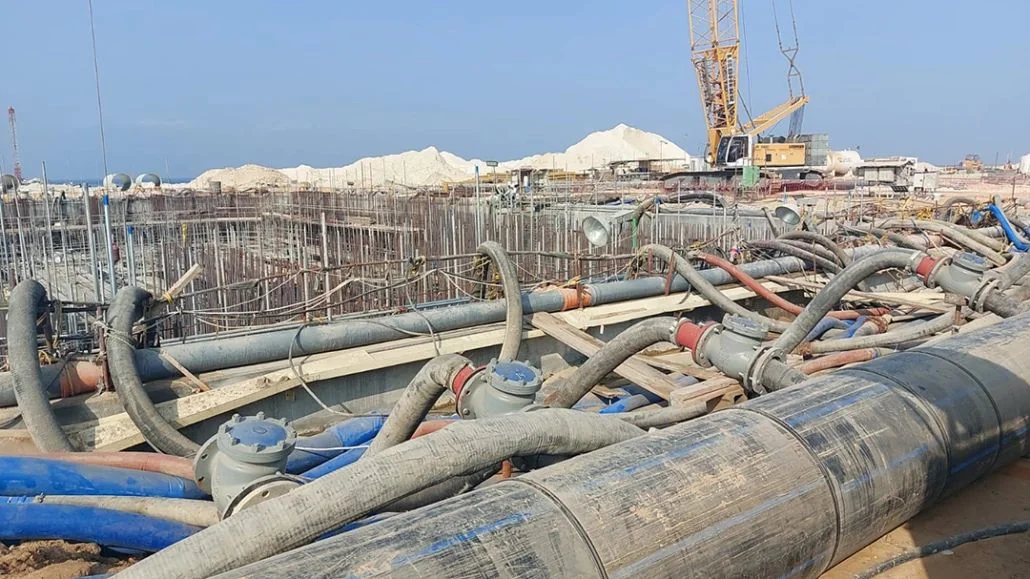
For a marine jetty in Abu Dhabi, SAEC drilled 157 bored piles, 800 mm in diameter, and placed concrete between 5 m and 13 m below sea level. For a water tank and pump station we installed 241 piles of 600 mm to 1,000 mm diameter, 17–18 m long, using temporary casings of matching diameter. Cased bores were also used for lighting pole foundations on a coastal site and for pedestrian bridges in Al Ain.
Frequently asked questions
Is the casing left in the ground?
Temporary casing is withdrawn during concreting and reused. Permanent casing or a liner is used only where the design calls for it, for example in some marine works.
Does casing slow the work?
It adds a step, but it prevents collapses, concrete overbreak and remedial work, which cost far more time.
When is CFA a better choice?
For moderate diameters and depths in sand without significant rock penetration, where speed and low vibration matter.
Need bored piles on a sandy or high-groundwater site? See our piling services or contact our team. For Syrian projects, read the Super Arc Group guide to cased bored piles.
Share this article
If you found this article helpful, share it with others