Excavation Support and Dewatering for UAE Basements
How to choose shoring and dewatering for basements and deep excavations in the UAE, where groundwater is shallow and hard layers are common.
In coastal parts of the UAE, groundwater often sits close to the surface. A basement, tank or deep trench therefore needs two things at once: a wall that holds the ground and a system that controls the water. Choosing the two together avoids most of the problems seen on deep excavations.
Choosing the shoring system
- Steel sheet piles: interlocking sheets driven or vibrated into the ground. They are fast, reusable and limit water inflow when they reach a low-permeability layer.
- Soldier piles and lagging: steel beams in predrilled holes with lagging between them. Economical in dry or dewatered ground.
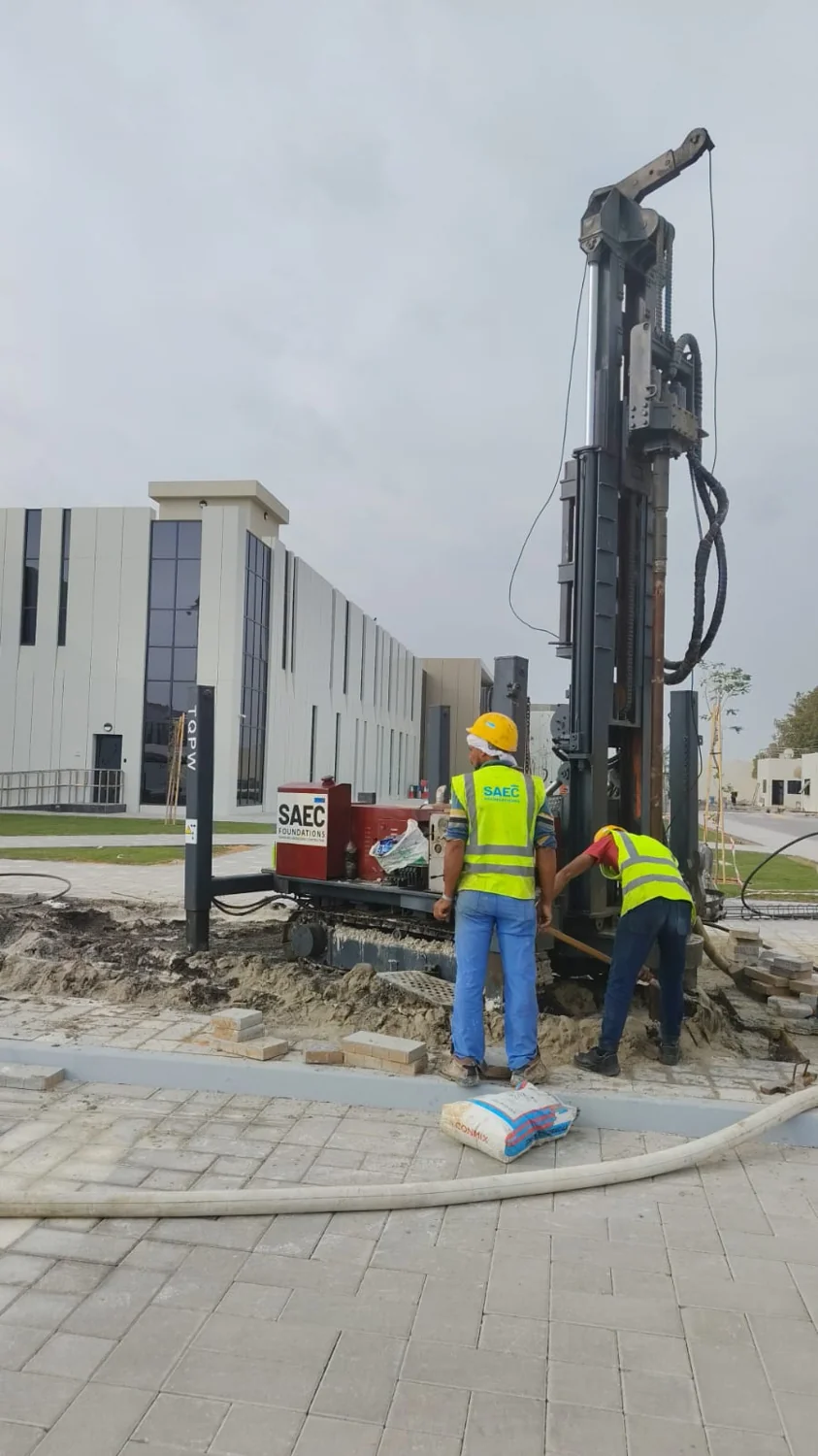
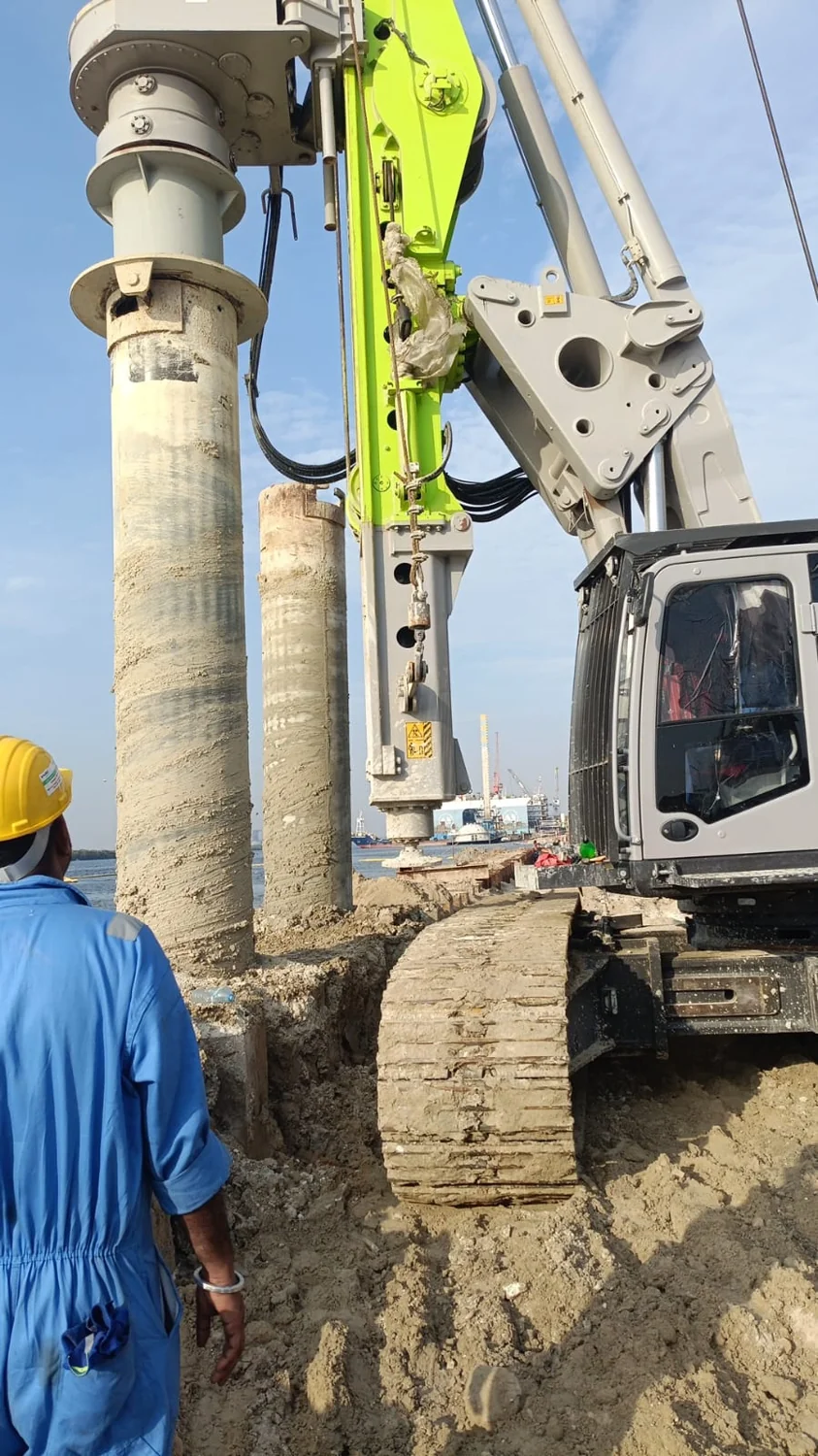
- Contiguous and secant pile walls: bored or CFA piles installed in a line. They are stiffer, so they suit deeper basements and sites next to buildings. Secant walls also limit water inflow.
- Bracing and anchors: struts, walers or ground anchors support the wall as the excavation deepens.
What decides the choice
- excavation depth and groundwater level
- the soil and rock profile, including hard layers
- distance to neighbouring buildings, roads and utilities
- whether the wall is temporary or part of the permanent structure
- space for the rig, and for anchors beyond the plot boundary
Hard layers and predrilling
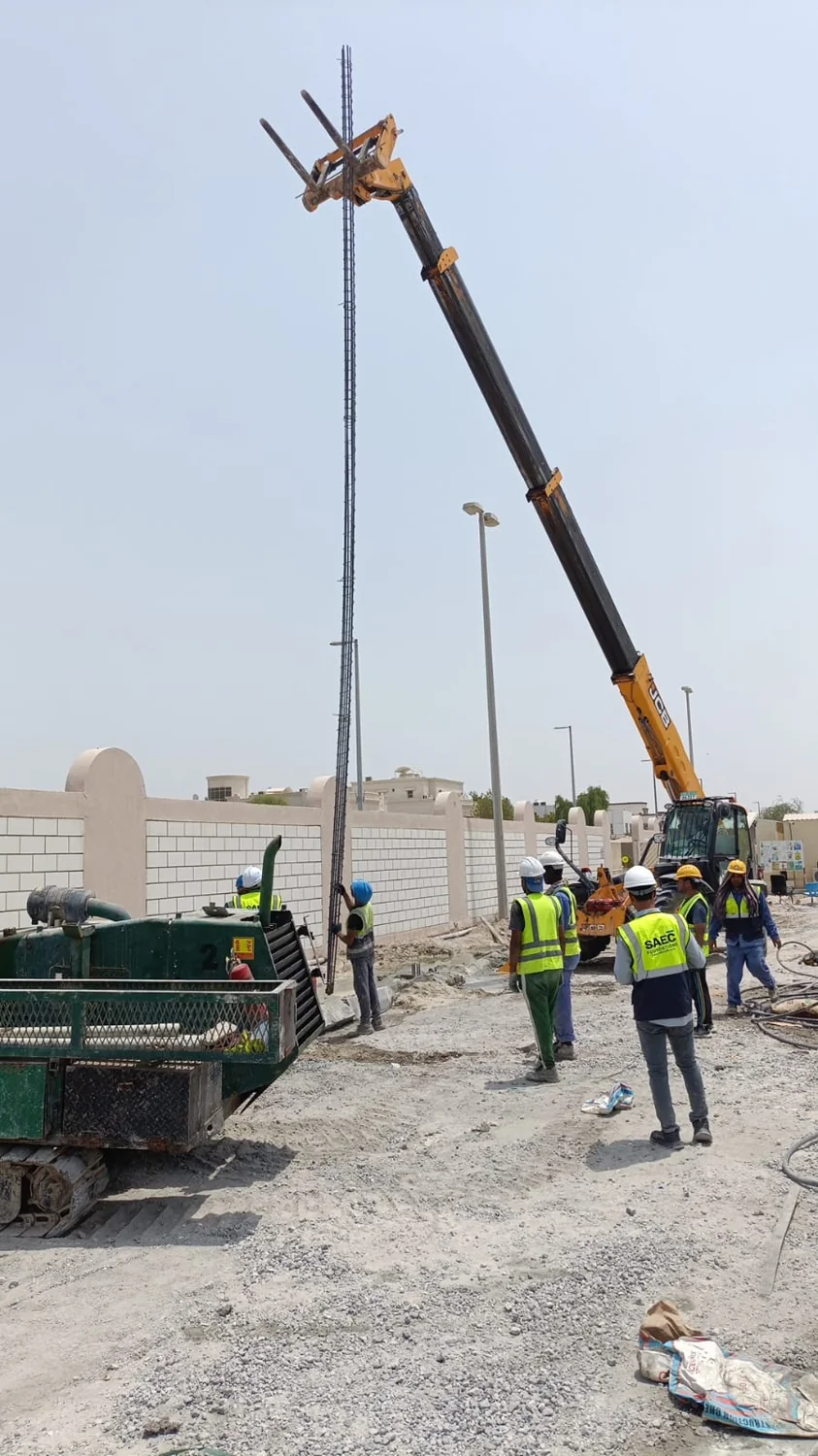
Sandstone and cemented layers are common at shallow depth and can stop sheets or beams before they reach design depth. Predrilling along the wall line opens a path for them. Our post on sheet piling through rock explains the method.
Dewatering methods
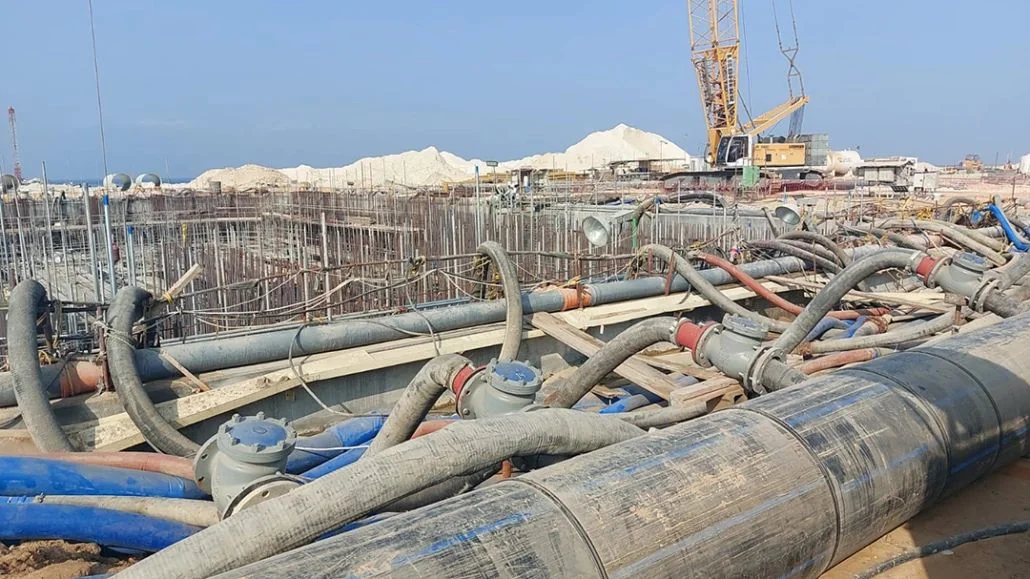
- Wellpoints: closely spaced small wells on a header pipe, for shallow excavations in sand.
- Deep wells: larger pumped wells for deeper excavations and higher flows.
- Sump pumping: for small inflows inside a cut-off wall.
Discharge normally needs a permit and an approved disposal point. Drawdown should be monitored where nearby structures could settle, and pumps need standby power, because a stoppage can flood or destabilise the excavation.
Monitoring during excavation
Wall movement, groundwater levels and the settlement of neighbouring structures are measured against trigger levels agreed before excavation starts. If readings approach a trigger, the response is already defined.
Project experience
At a site in Al Jurf, SAEC predrilled through an 8 m sandstone layer to install AU20 sheet piles with HEA 220–300 bracing, then extracted the sheets after the works. We also developed a shoring design for a high-rise site in Dubai, installed predrilled shoring beams in Abu Dhabi and carried out CFA piling and shoring for a fuel station.
Frequently asked questions
Can sheet piles be recovered after the works?
Yes, for temporary works, and recovery lowers the cost. Extraction has to be planned so that it does not disturb the new structure or backfill.
How long does dewatering have to run?
Until the structure is heavy enough to resist uplift and the waterproofing and backfilling are complete. The engineer sets that point.
Which shoring system is cheapest?
It depends on depth, groundwater, soil and what is next to the site. A system that looks cheaper can cost more if it needs heavy dewatering or extra bracing.
Planning a basement or deep excavation? See our shoring systems or send us your drawings and soil report. For projects in Syria, see the Super Arc Group guide to excavation support.
Share this article
If you found this article helpful, share it with others