Sheet Piling Through Rock: Why Predrilling Makes the Difference
When rock or hard sandstone layers stop sheet piles from being driven, predrilling with a pile rig keeps temporary shoring on programme. Here is how it works.
October 21, 2026
Steel sheet piles are one of the quickest ways to hold back the ground around pipelines, utility crossings, pump stations and deep excavations. In many parts of Abu Dhabi, though, the ground has rock or hard sandstone layers that a vibratory driver cannot get through. Forcing the piles damages the sections, slows the work and can stop them short of the design depth. Predrilling solves this.
How predrilling works
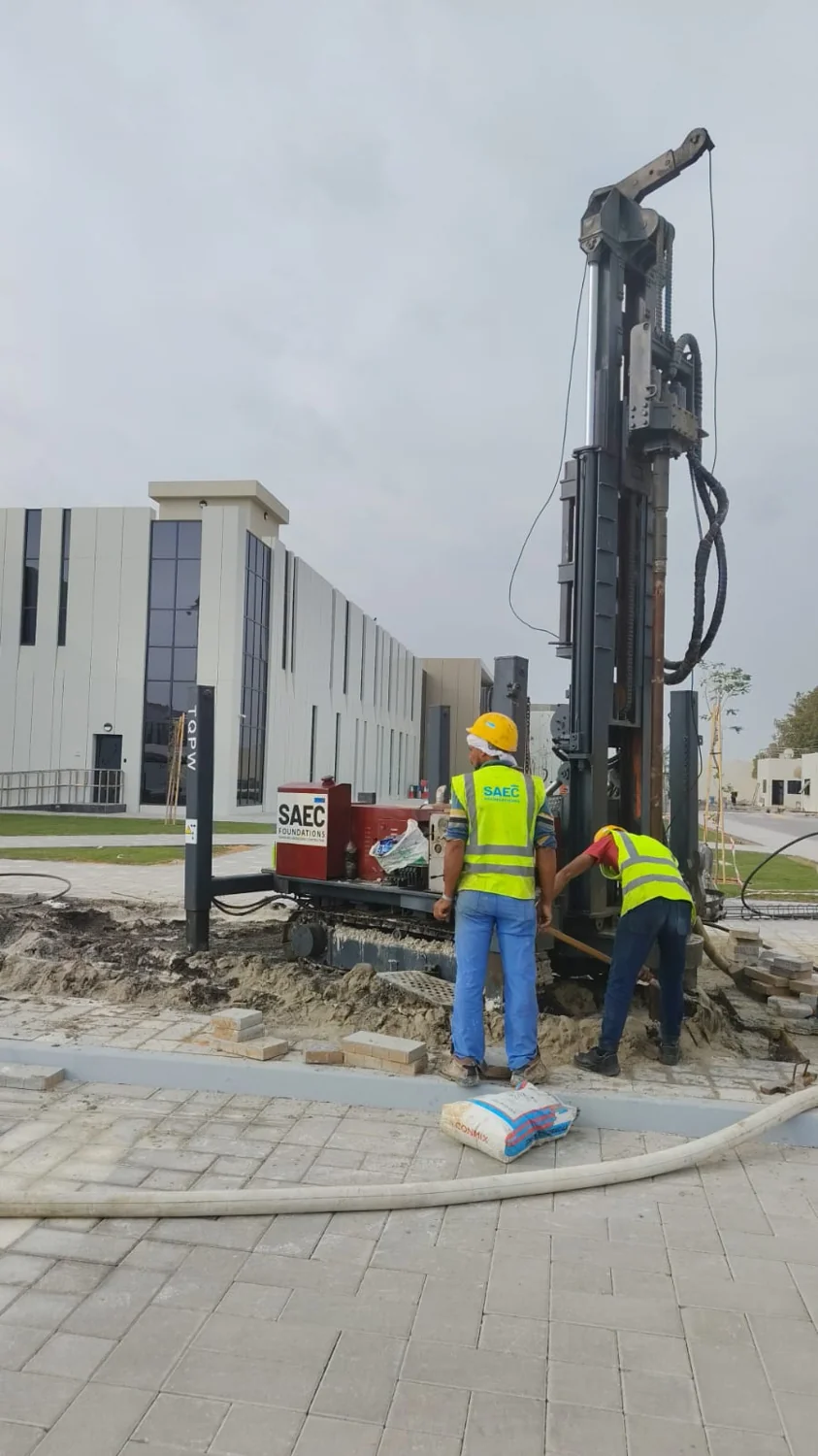
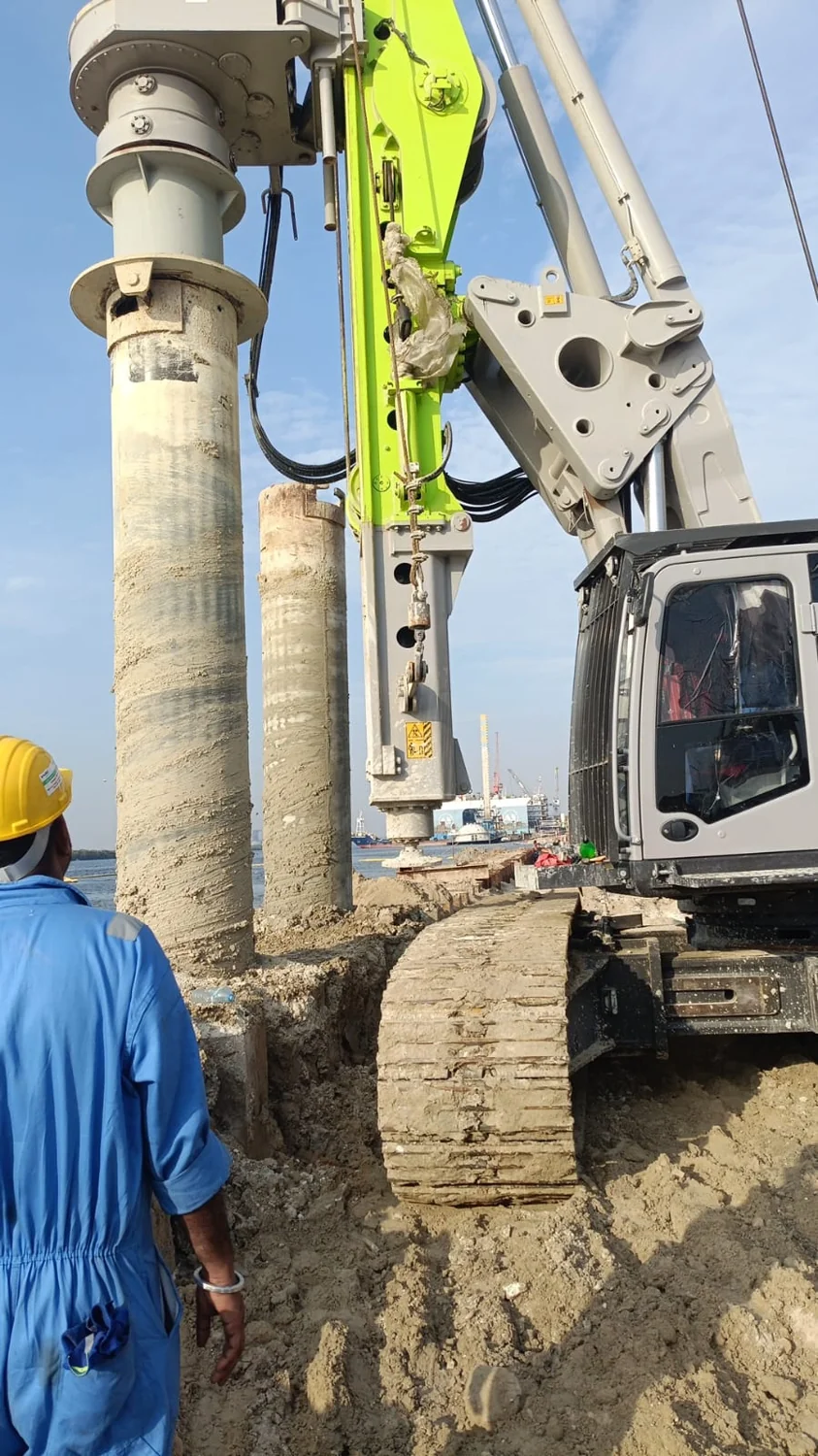
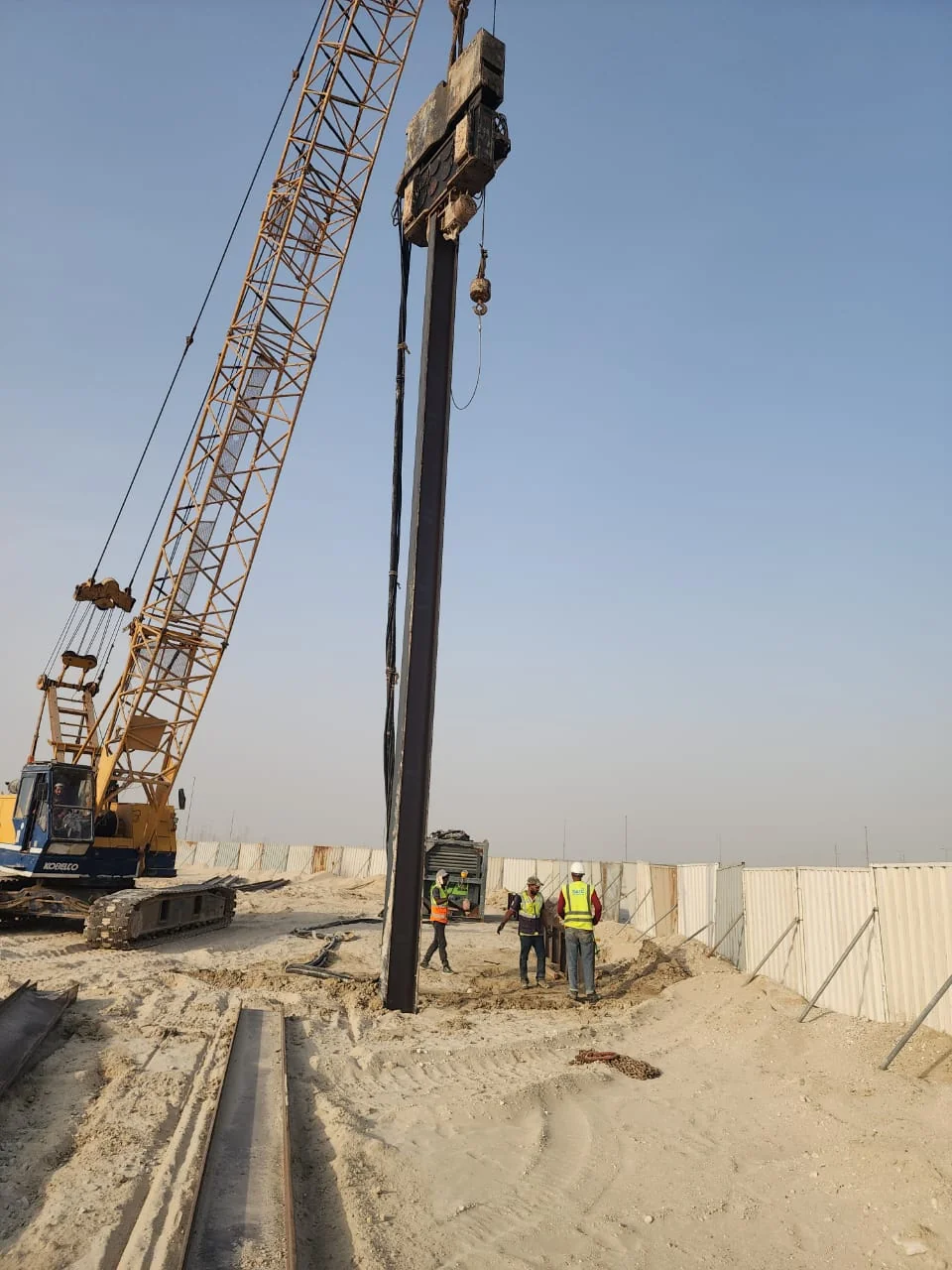
Before the sheet piles go in, a piling rig drills along the line of the wall to break through the hard layer. The sheet piles are then driven into the loosened ground to the required depth with a dedicated machine, such as an ABI-type leader rig with a vibrator. When the permanent works are finished, the same type of machine pulls the piles out so they can be used again.
A typical scope of work
- predrilling with a pile rig along the sheet pile line through rock or sandstone
- installing temporary steel sheet piles, for example AU20 sections about 12 m long
- bracing or waling where the excavation depth needs it
- extracting the sheet piles when the works are complete
Planning the programme
Sheet pile work is usually priced per linear metre for each operation (predrilling, installation and extraction), plus mobilization. The equipment is specialised, so the programme assumptions matter. A clear proposal says how long each operation should take at each location, and what standby rate applies if access is interrupted or the equipment cannot be released on time.
Working in controlled and oil and gas sites
Many pipeline and energy projects sit inside security-controlled areas. Permits for people and vehicles must be in place before mobilization, and equipment often has to go to a marshalling yard before it can enter the site. Building these steps into the programme early avoids expensive delays on the first day.
Who provides what
Agreeing responsibilities at tender stage keeps the work moving. The main contractor normally provides permits and gate passes, utility clearance, a stable working platform, setting out, excavation and transport of sheet piles between sites. The specialist contractor provides the predrilling rig, the installation and extraction machines, and the crews to run them.
Our experience
SAEC has predrilled through an 8 m sandstone layer in Abu Dhabi to install AU20 sheet piles with HEA bracing, and extracted them after the works. View the project.
Talk to our shoring team
If your project has hard ground and a tight programme, see our shoring systems page or contact SAEC.
Share this article
If you found this article helpful, share it with others