Before Concreting Bored Piles in Abu Dhabi: Key Quality Checks and Site Records
A practical guide to checking the bore, reinforcement cage and fresh concrete before bored pile concreting in Abu Dhabi, and recording placement on site.
November 28, 2026
On a multi-storey building project in Abu Dhabi, the piling team has completed a bore and installed the reinforcement cage. The concrete trucks have arrived. Before placement starts, the quality engineer reviews the bore record, cage position, concrete supplied and equipment readiness. The designated party then clears the inspection point under the project’s agreed procedure. This guide sets out the checks and records that inform that decision and help the team review each completed pile.
Why are pre-concreting checks critical?
Once concrete is placed, the bore base, spacers and reinforcement position can no longer be inspected directly. Pre-pour records establish what was checked, and placement records connect concrete loads and test results to the same pile. If a bore’s condition changes or placement is delayed after inspection, the responsible team should establish whether the earlier checks remain valid. The December 2024 third edition of the EFFC/DFI guide explains fresh concrete quality control and execution checks. Use it as technical guidance alongside the project documents and applicable local requirements that govern acceptance. EFFC/DFI guide, sections 5 and 6 · DFI concrete task group.
What should be checked in the bore?
Match the pile ID and location to the setting-out record and approved drawing. Review bore diameter, depth and base level, and check verticality where specified. Confirm bore stability, groundwater conditions and the recorded base cleanliness inspection. Base cleanliness is especially important where the design relies heavily on end bearing. Inspection methods and acceptance criteria for debris and deviation come from the project drawings, specifications and approved method. EFFC/DFI guide, section 6.2.
Does the bore need temporary casing or support fluid?
Ground conditions, groundwater and the approved method determine how the bore is supported. Options include temporary casing, bentonite slurry and polymer support fluids. A stable bore that meets the project’s dry-placement criteria may be concreted under dry conditions. Before placement, check casing condition where used and review support-fluid test results against the specified sampling and timing requirements. Applicable checks may include density, viscosity or sand content. EFFC/DFI support fluids guide · SAEC article on temporary casing.
What should be checked on the reinforcement cage?
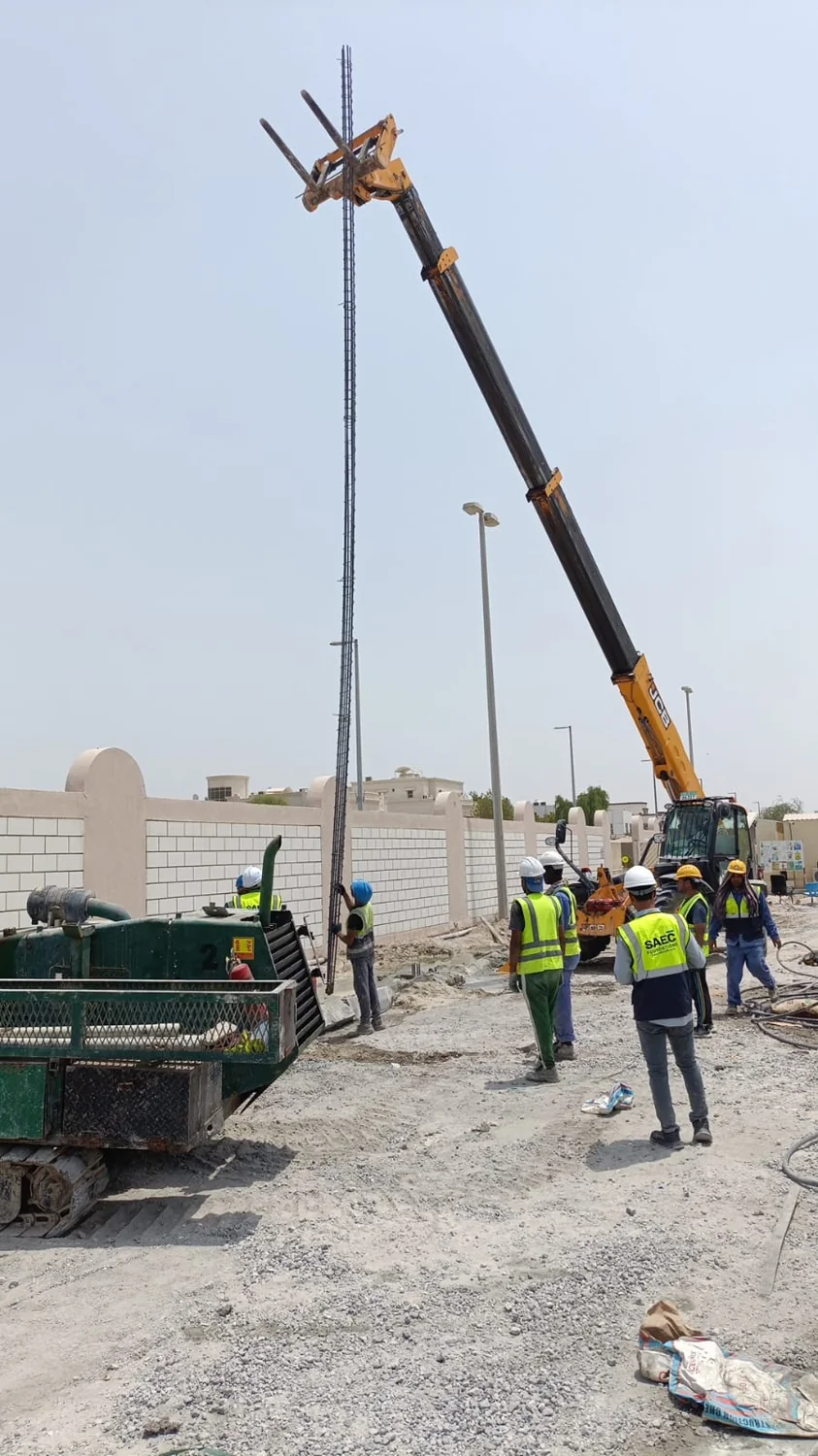
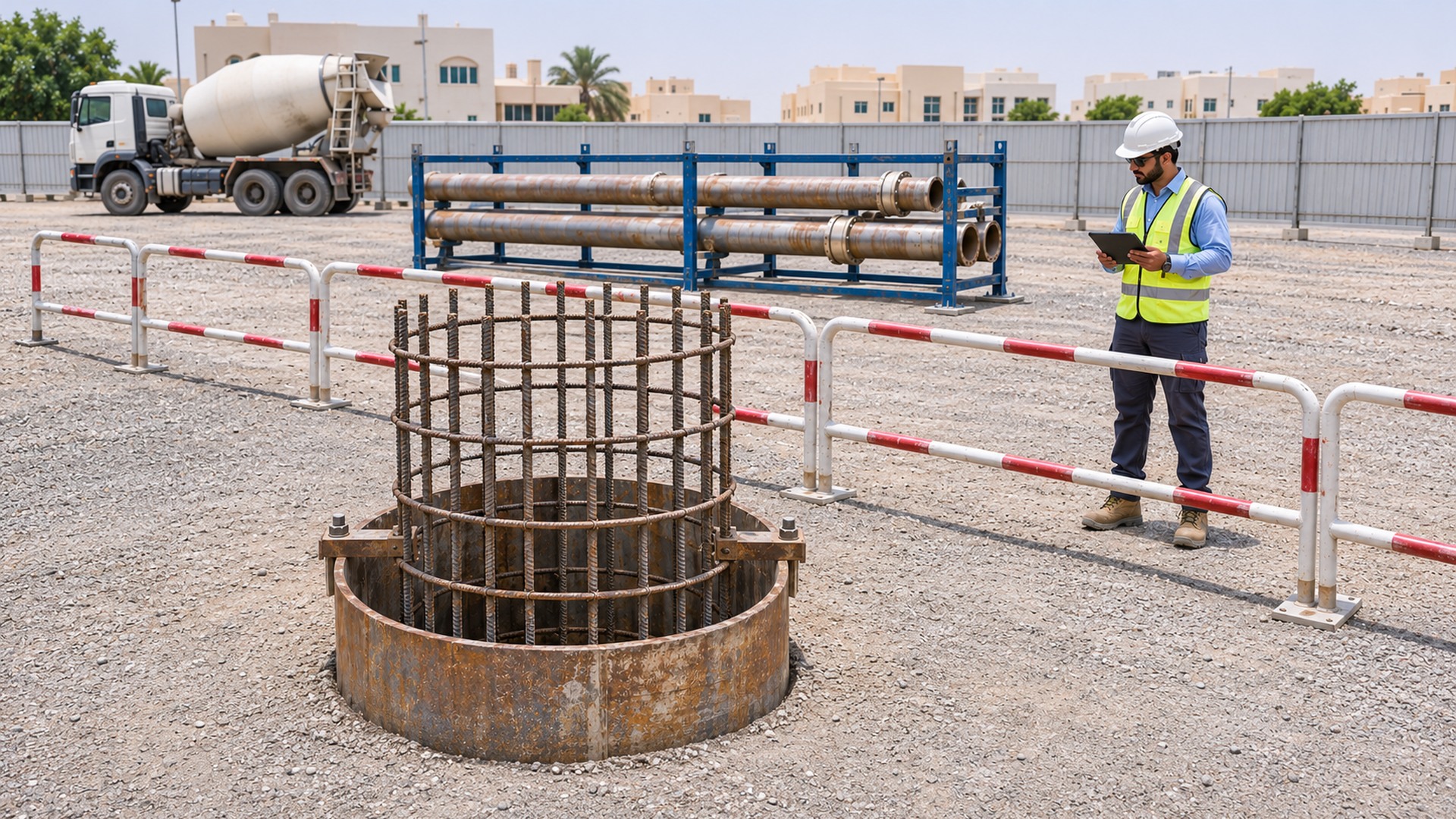
Review cage dimensions, bar arrangement and clear spacing, specified cover, spacers and centralisers. After installation, confirm the cage position and level and check embedded items, such as cross-hole sonic logging tubes where specified. Congested reinforcement or attachments can restrict concrete flow and make it harder to surround the bars uniformly. Review lifting and handling records where required. Lifting and splicing remain subject to approved plans and competent supervision. EFFC/DFI guide, section 6.8 · FPS cage design and lifting guidance.
What fresh concrete properties matter?
Compressive strength describes hardened concrete performance. Workability describes how fresh concrete flows and passes around reinforcement. Workability retention describes how long it maintains the specified fresh properties through delivery and placement. Stability includes resistance to segregation, bleeding and filtration. A mix that meets the strength requirement still needs to demonstrate the fresh properties required for tremie placement.
A conventional slump test may form part of the test plan. The project specifies the tests needed to assess flow, retention and stability for its mix, including slump-flow where adopted. Durability requirements reflect the exposure conditions established by the design. EFFC/DFI guide, section 5 · SAEC article on pile durability.
When is tremie placement used?
A tremie pipe places concrete in a bore containing water or support fluid when specified by the approved method. Concrete rises in the bore and displaces the fluid while limiting mixing. A dry bore may permit a different approach after the team verifies site conditions and specification requirements. The specialist team defines the equipment, placement sequence and continuity arrangements in the approved pour plan. EFFC/DFI guide, section 6.
What should be checked before concrete trucks arrive?
Confirm the approved mix, planned quantity and delivery sequence with the supplier. Check equipment readiness, contingency arrangements, test staff and sampling provisions. Prepare the pile record and confirm who inspects and who authorises placement under the inspection and test plan (ITP). Check each load on arrival against the specified criteria.
What should be monitored during placement?
Link delivery tickets, delivery and discharge times, and fresh concrete results to the pile ID. Record placement continuity, the actual volume placed and concrete levels at the agreed stages. Record tremie and casing details where applicable. Compare placed volume and measured rise against the theoretical volume based on the specified geometry. An unusual difference may reflect local overbreak or warrant a check of level measurements and volume records. Diagnosing a defect requires review of the readings, bore log, site observations and other inspection evidence. EFFC/DFI guide, section 6.9.
What happens if delivery is delayed or placement is interrupted?
Record the start time, duration, work stage and affected loads. Refer the interruption to the responsible engineering team for assessment of concrete condition, equipment and available readings under the approved project procedure. Record the decision on resumption or corrective action, who authorised it and any follow-up tests. Review supplier and site records together to establish the sequence.
What records should be retained for each pile?
- Identification — Pile ID, approved drawing reference and setting-out record.
- Bore and reinforcement — Bore log, depth, base and support checks where applicable, and cage inspection and level.
- Concrete and placement — Mix reference, delivery tickets, test results, volumes, levels, interruptions and decisions.
- Inspection and acceptance — Inspection requests, applicable approvals and post-construction test records when available.
The contract, specifications and ITP determine the required records and who signs them off. A consistent pile ID keeps them traceable during review.
How do placement records relate to post-construction testing?
Pile integrity results, including cross-hole sonic logging where specified, can be reviewed with placement records to interpret indications. Load tests assess the pile’s response to loading under the specified static or dynamic test method. Each test has a defined purpose and limitations. Acceptance depends on the complete set of evidence required by the project. SAEC guide to integrity and load testing.
Pre-concreting checklist for bored piles
A. Bore readiness
- Confirm location, dimensions, depth and specified verticality. Review base cleanliness, stability and water or support-fluid conditions.
B. Reinforcement readiness
- Check cage, clear spacing, cover, spacers, level and embedded items against the drawings.
C. Concrete readiness
- Confirm mix approval, quantity, delivery sequence, sampling and fresh concrete testing.
D. Equipment and placement planning
- Check equipment, the approved method, supply continuity and interruption arrangements.
E. Inspection and documentation
- Match the pile ID to the inspection records and obtain clearance of any hold point from the designated party.
Use this checklist to review readiness. Pour authorisation follows the project documents and agreed delegation.
How can SAEC help?
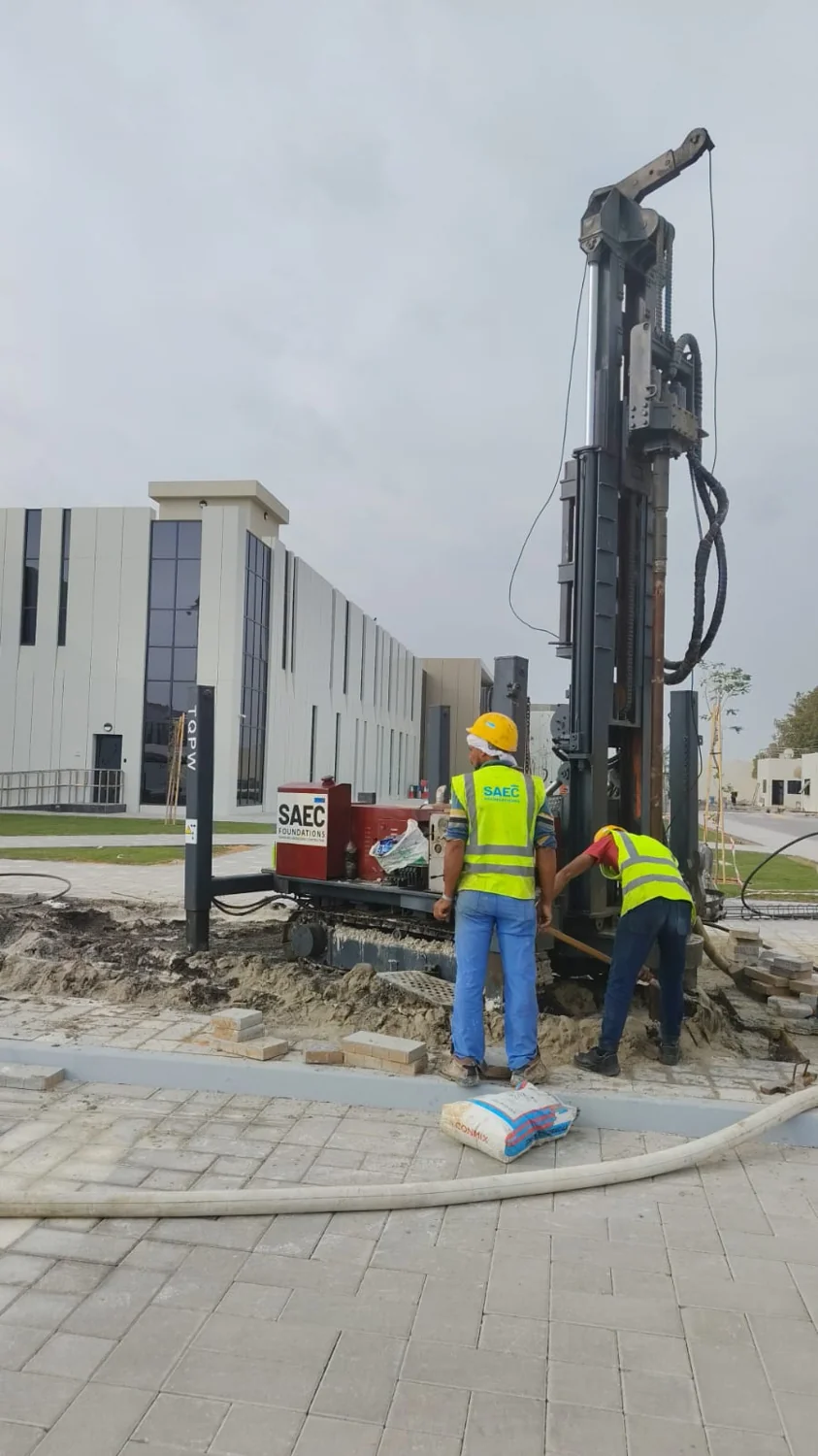
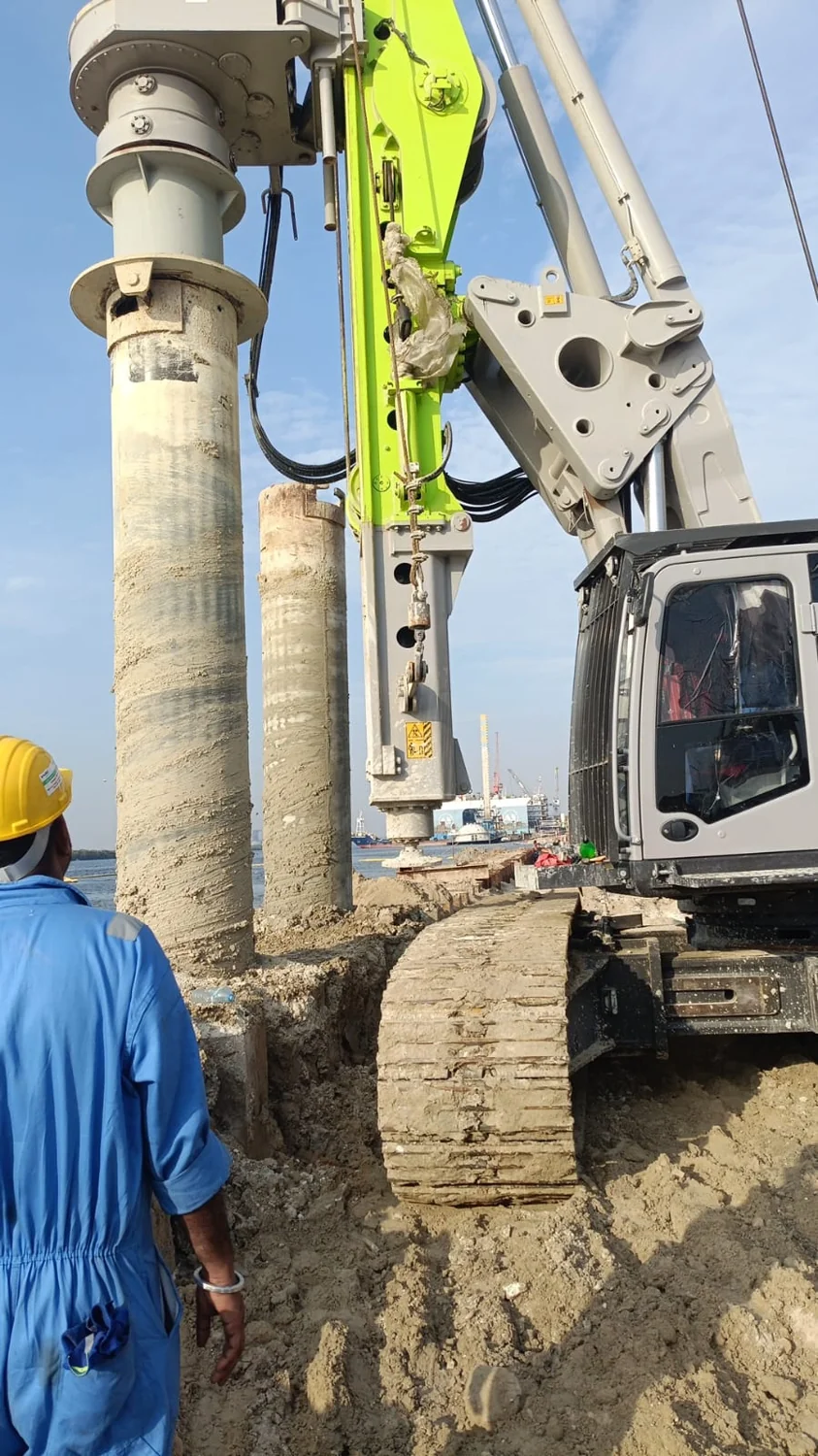
SAEC provides bored piling and foundation engineering services. The specialist contractor coordinates boring, reinforcement, concreting, testing and records within the agreed scope. Supervision and approval responsibilities follow the project documents. To discuss your piling scope, contact SAEC with details of the ground investigation, drawings and specifications. Piling services · Foundation engineering · Contact SAEC.
Frequently asked questions
Is concrete strength alone sufficient?
Pile quality also depends on the bore and cage checks, suitable fresh concrete and controlled placement.
Why inspect the bore base before concreting?
To verify the base condition and debris against the specification, particularly where the design relies on end bearing.
Why check the cage position?
Position and level checks help confirm the specified cover and reinforcement arrangement.
Do all bored piles require a tremie?
The approved method depends on bore conditions, water or support fluid and the project specification.
Why compare actual and theoretical concrete volumes?
The comparison relates volume to measured rise and flags differences that may warrant checking bore, measurement or delivery records.
Can integrity tests replace execution records?
Integrity tests provide evidence about the completed pile. Execution records show what happened during placement and which decisions were taken.
Share this article
If you found this article helpful, share it with others