Piling Near Existing Buildings in Abu Dhabi: Pre-Work Surveys, Vibration and Settlement Monitoring
A practical guide to planning piling near existing buildings in Abu Dhabi, from pre-work condition surveys to vibration, settlement and trigger response.
November 28, 2026
A new development in Abu Dhabi needs piled foundations on a plot next to an occupied building. The rig appears to have room, but the neighbouring foundation depth is uncertain and a buried service follows the boundary. Before work starts, identify assets at risk, record their condition and agree what would require action. Pile type is one part of that decision, alongside the ground, groundwater, neighbouring structures and concurrent works.
Why is piling near existing buildings different?
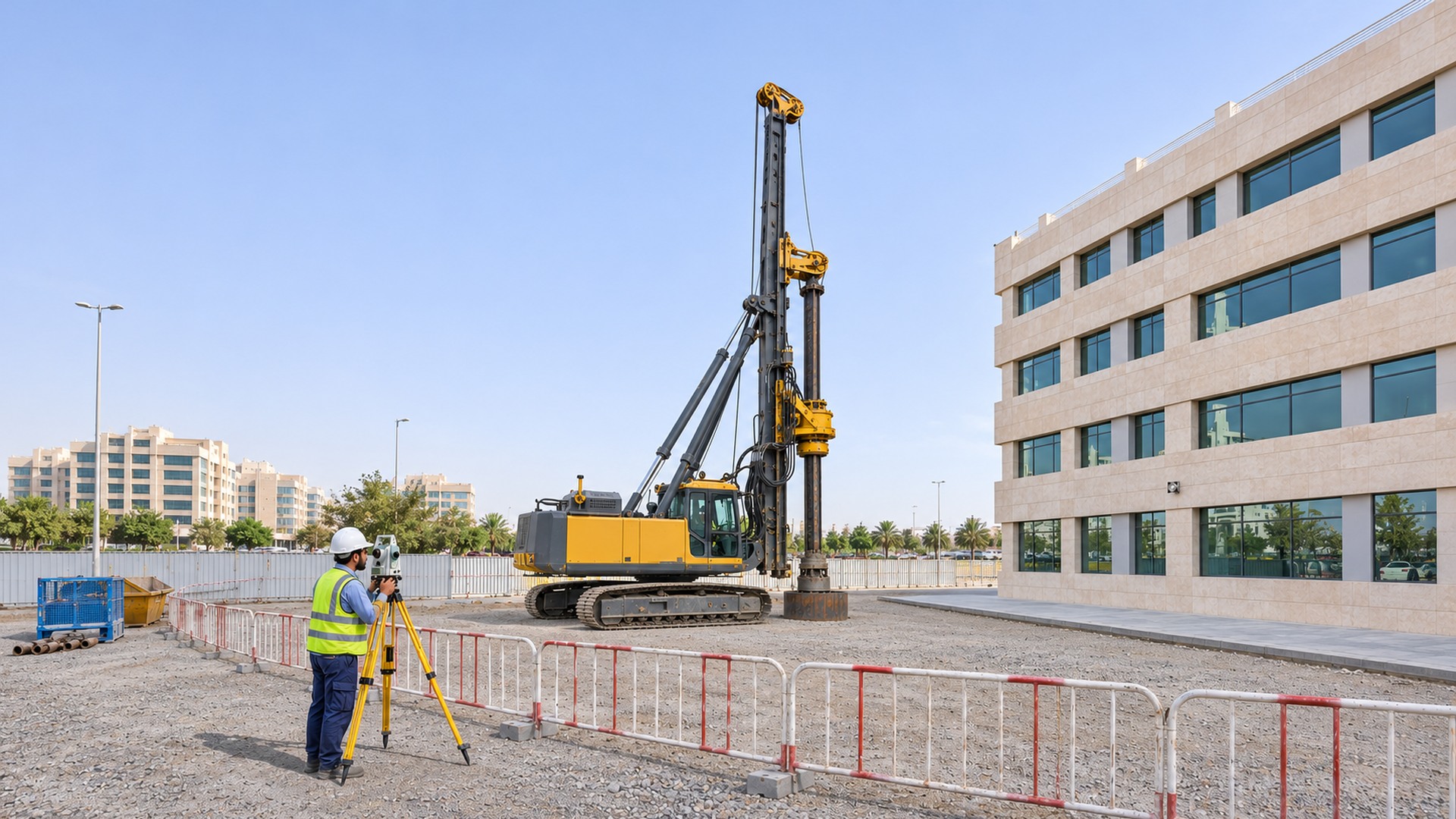
On constrained sites, piling, excavation and plant movements can take place close to existing foundations and live services. Sensitivity varies with the neighbouring building’s structure, condition and use. Occupied facilities may need noise and vibration coordination. Sensitive services may need separate assessment. Define the potential area of influence and coordinate with the designer, principal contractor, specialists and neighbouring asset representatives as appropriate. FPS guidance on piling hazards and risks.
What information is needed before work starts?
Collect the approved structural and geotechnical drawings, ground investigation report, property boundaries, site levels and verified buried-services information. Obtain available details of neighbouring foundation types and levels, basements and previous repairs. Review the proposed piling method, plant and access restrictions alongside the sequence for excavation, shoring and dewatering. Record confirmed facts, gaps and assumptions. If an adjoining foundation’s depth is unknown, assign someone to resolve it and agree how it affects the decision to start.
What is a pre-construction condition survey?
A pre-construction condition survey, also called a dilapidation survey, is a dated record of visible conditions in the areas inspected before work starts. Identify existing cracks and defects on a drawing or by a clear location reference. Link photographs to elements, locations and dates, and record known previous repairs and areas that could not be accessed. Agree the survey scope, access arrangements and record custody beforehand.
A visual survey records what could be inspected. Questions about structural adequacy or the cause of an existing defect require an assessment with its own scope. Photographs assist comparison over time. Investigate later changes using engineering review, monitoring data and work records. Singapore Building and Construction Authority guide to pre-construction surveys.
How can the piling method affect neighbouring structures?
- Driven piles — Impact or vibratory driving can generate ground vibration. Displacement during installation can also cause lateral movement or local heave, depending on pile type and ground conditions.
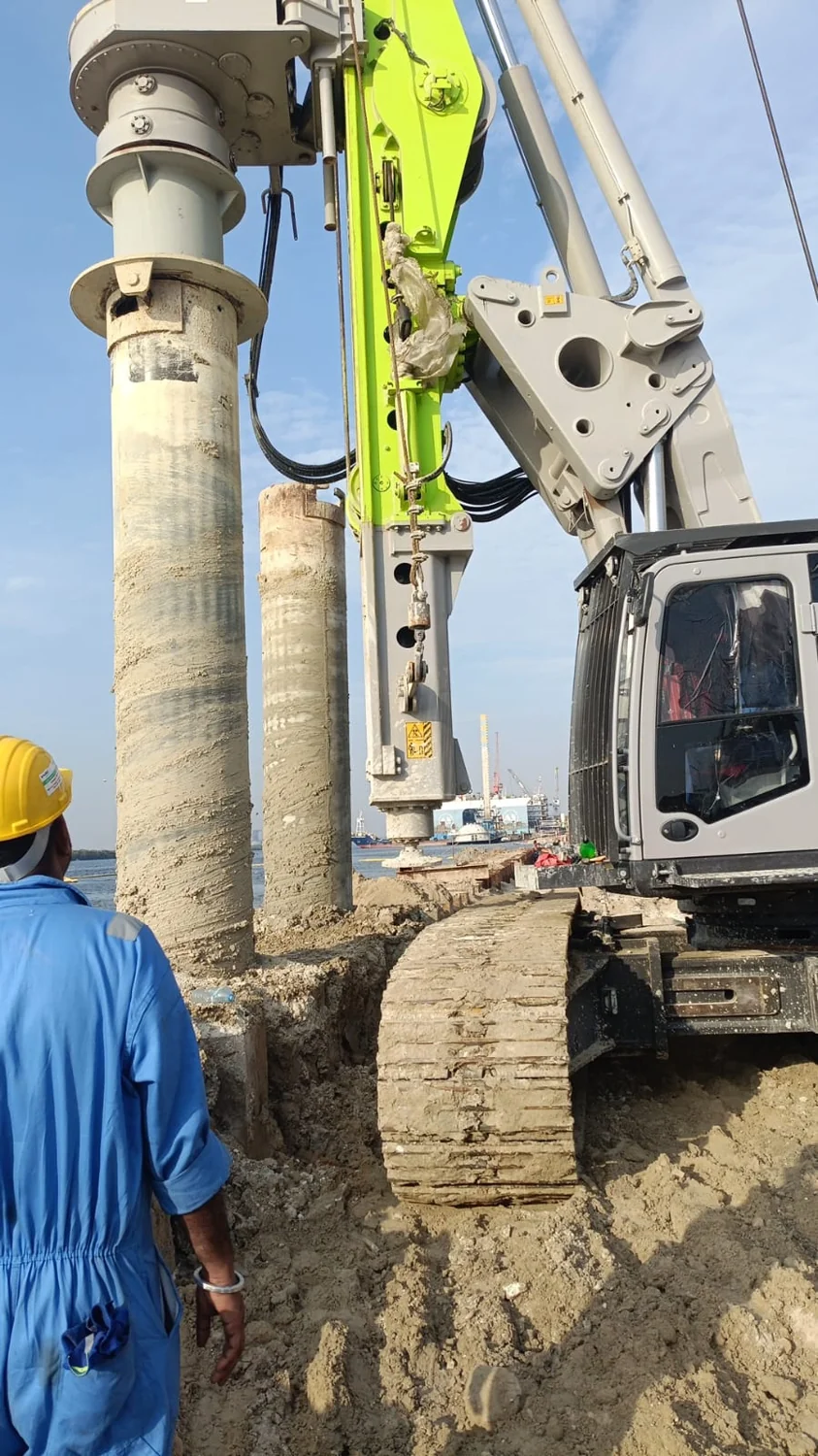
- Rotary bored piles — Review bore stability and potential ground loss, as well as vibration from casing installation, hard-stratum drilling or associated plant.
- Continuous flight auger (CFA) piles — These are drilled. Excessive soil extraction in some conditions remains a potential source of ground disturbance.
- Micropiles — These can suit restricted-access sites. Drilling and grouting methods and local ground conditions remain relevant near existing foundations.
Compare methods for the actual plant, soil and groundwater, proximity and loading of existing foundations, work sequence and ancillary activities. FHWA guidance on deep foundations · FHWA guidance on CFA piles · SAEC comparison of piling methods.
What should be monitored during the works?
The responsible engineer selects instruments and locations to suit the expected effects and sensitivity of each asset. Survey points can track settlement of buildings or ground. Vibration monitors capture responses during relevant activities, and crack gauges track changes at selected cracks. Inclinometers can track lateral displacement with depth. Groundwater monitoring may be appropriate where dewatering or changes in pore-water pressure are relevant. Link readings to location, time and work stage. Assign responsibility for data gaps or instrument failure. Monitoring informs decisions within the limits of instrument coverage and accuracy. Crossrail instrumentation close-out report.
How do vibration, settlement and other indicators differ?
- Vibration — Oscillatory movement associated with an event, such as pile driving or plant operation. Interpretation depends on the event, measurement location and condition of the asset.
- Settlement — Downward movement over time. Differential settlement between points can reveal distortion that a single reading would miss.
- Lateral ground movement — Horizontal displacement that may occur near an excavation support wall or adjoining foundation, with or without settlement.
- Signs of structural distress — Observations requiring specialist assessment, such as progressive cracking of a structural element or visible distortion.
A vibration trigger exceedance calls for the response in the plan. Establishing whether damage occurred and what caused it requires engineering review of the readings, prior condition and activities at the time. FHWA guidance on driven pile vibration.
How should trigger levels and responses be set?
Take baseline readings before activities that could affect the asset. Agree monitoring frequency for critical stages and, where appropriate, after the work. The engineer sets alert and action levels using the risk assessment, asset condition, predicted movements, approved specifications and measurement precision. The rate of change may also inform escalation.
Record who receives alerts, checks readings and authorises any suspension or resumption of the affected activity. Responses may include more frequent monitoring, asset inspection, a method review or suspension under the agreed plan. Implement the required response and review the reading alongside trends and site records. Document the decision, reasoning and follow-up. Crossrail example of asset-specific monitoring triggers.
How do shoring and groundwater affect adjacent buildings?
Movement of an embedded wall during excavation can affect the ground behind it. Groundwater drawdown outside the excavation can contribute to settlement in compressible strata. Piling, shoring and dewatering teams should review their shared sequence and monitoring data before changing a stage that could affect neighbouring assets. A Crossrail case study relates excavation stages to measured movements. CIRIA C760 provides technical guidance on embedded retaining walls and construction sequencing. Abu Dhabi’s underground construction code addresses piling and pre-work checks for buried services. Confirm the applicable safety requirements and approvals with the relevant authorities. Crossrail ground movement case study · CIRIA C760 publisher’s description · Abu Dhabi underground construction code, section 3.19 · SAEC guide to excavation support and dewatering.
How can planning and documentation reduce disputes?
Maintain a record that connects the condition survey, dated measurements, meeting minutes, site sequence and changes in plant or method. For a technical issue, record who received it, what was checked and who authorised the response. This lets the parties compare observations with the activities under way and review decisions together. SAEC guide to daily site reporting.
Pre-work piling checklist
- Gather the ground investigation, approved drawings and site levels.
- Confirm boundaries and list neighbouring assets, known foundation details and information gaps.
- Verify buried services and interfaces with concurrent works.
- Agree the condition survey scope, access and record custody.
- Review piling plant, method and the sequence with shoring and dewatering.
- Confirm monitoring needs, instruments, baseline readings and measurement frequency.
- Agree trigger levels, responses, decision owners and coordination with the principal contractor.
- Check applicable approvals and retain records, drawing revisions and review decisions.
For rig access and working platforms, see the piling site readiness checklist.
How can SAEC help?
SAEC provides piling, foundation engineering and excavation support services. Its piling team reviews ground conditions, loads and access with structural and geotechnical designers. Survey, monitoring and response responsibilities depend on the project and contract. To discuss the piling scope, contact SAEC with details of available drawings, the ground investigation, site constraints and neighbouring assets. Piling services · Foundation engineering · Shoring systems · Contact SAEC.
Frequently asked questions
Can piling be carried out next to an existing building?
Yes, where project assessment confirms the method, controls and monitoring are suitable for the ground and neighbouring asset.
Do all piling methods generate high vibration?
Vibration varies with the method, equipment and soil. Ancillary works may also contribute.
Why carry out a pre-construction condition survey?
It records visible conditions and defects at a known date and identifies inaccessible areas, providing a basis for comparison.
Is vibration monitoring sufficient?
The risk assessment may also call for settlement, lateral movement or groundwater monitoring.
Who specifies the trigger levels?
The specialist responsible for the monitoring plan proposes them using the project assessment and specifications. Approval follows the project’s agreed responsibilities.
What should a developer provide when requesting a piling quotation?
Supply drawings, the ground investigation, access and work constraints, information on adjacent assets and services, and agreed survey or monitoring requirements.
Share this article
If you found this article helpful, share it with others